Tuesday, May 30, 2017

Red 'ouse

With the help of funding from a Creative New Zealand Arts Grant, I was able to travel to the UK from early April to the beginning of this month to research Mary Taylor. 

Mary Taylor was for about fifteen years a shopkeeper in Wellington in the 1840s and 50s, and much more, but she is best known as Charlotte Bronte's best friend. 

I had planned to travel to her ancestral home, Red House, in West Yorkshire.

 This is not Red House.
This is Oakwell Hall.

Kirklees Council chose to save Oakwell Hall instead of Red House.

Thank you for showing an interest in Red House. You may not be aware that at the last General Election the country chose to elect a government that made no secret of their commitment to austerity and their desire particularly to “shrink” local government. 

They have also shown and demonstrated their wish to move resources from authorities in the North of England and to protect authorities in the south. As a consequence we have seen a cut in government funding of £180m . This is at a time when demand for social care, that already makes up 60% of spending, is rising significantly.

Given the choice between protecting a child from abuse, supporting an aged person to stay at home, helping a person with disabilities to lead a normal life or subsidising visitors to a House once occupied by a significant historical figure, there was only one choice we could make.

We didn’t want to make the cuts. But we have no choice

David Sheard

Leader Kirklees Council


"Do you know anything about Oakwell Hall?"
"Isn't it the ancestral party pad of some privileged white men?"
Ha. ha ha h...
 
I asked, would have closed Red House if Mary Taylor had been a man? I imagined my words in a bubble, written in Comic sans.

 This is Red House.


In "1565 Henry Batt purchased the manors of Oakwell, Gomersal, Heckmondwike and Heaton. The Oakwell property was described as, 'Okewell Hall with the appurtances in Okewell, Gomersall, Birstall and Heckmondwike, now in the occupation of James Nettilton, Christopher Nettilton, Robert Popelay and William Taylor...'
     We cannot be certain that this William was one of the Red House Taylors, but the family tree does show a William Taylor of Gomersal who died in January 1588." (Ferrett, 1987)

Although, I was lucky enough to gain access to Red House, it was no longer running as a museum and had been stripped of its period furnishings and Taylor family art.


The Bronte Society now have the stained glass windows depicting Milton and Shakespeare. Red House is to be sold on the open market.

Barnsley poet Ian MacMillan once demonstrated that the difference between a Yorkshire accent and a Derbyshire one hinged upon the phrase "You can come in my house". Tykes say 'ouse whereas Derbyshire folk pronounce arse. It's a bit like difference between selling an 'istorical 'ouse to save an 'istorical arse.


Tuesday, May 16, 2017

First fox


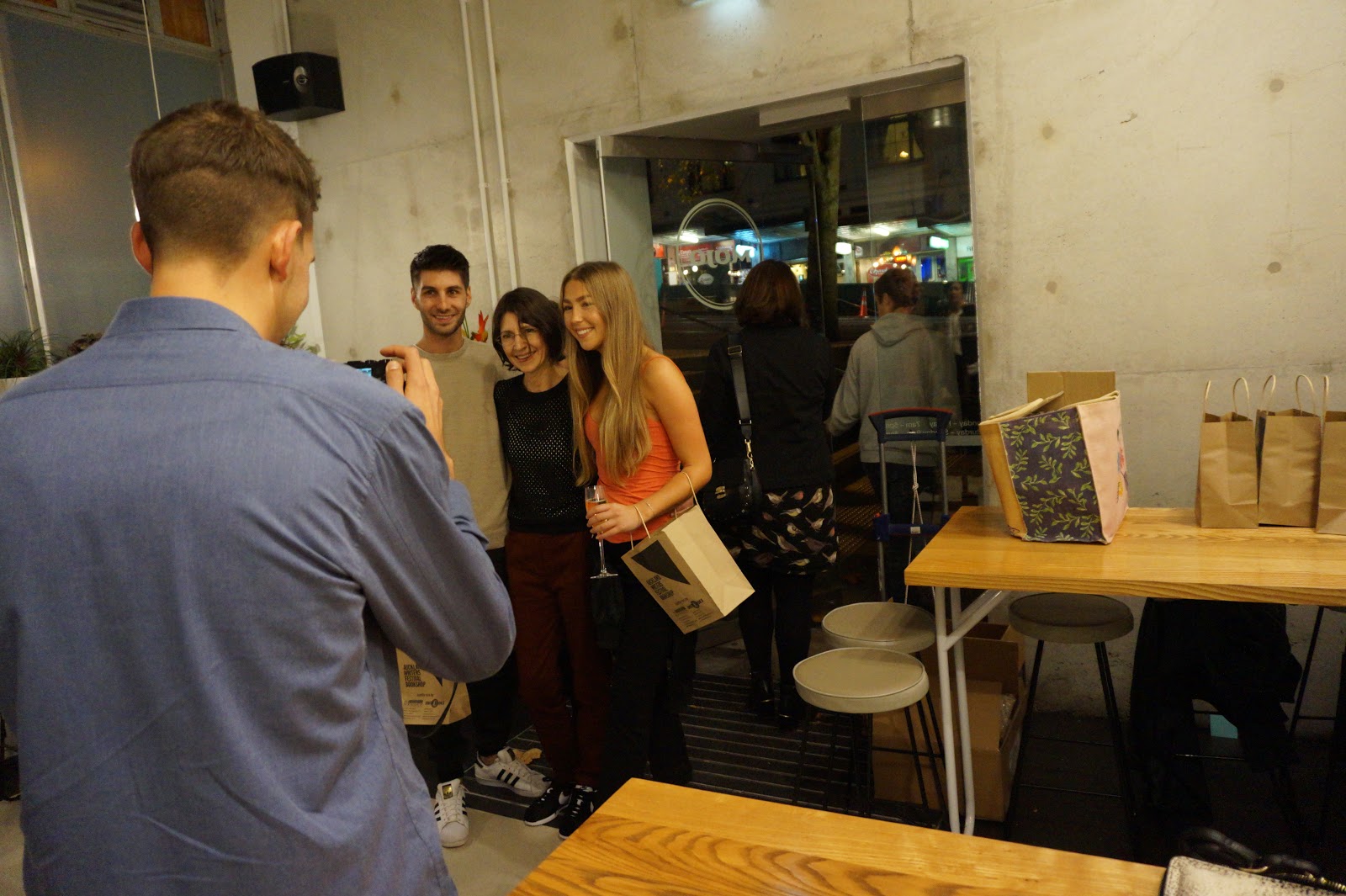
First fox is launched! And what a launch.
Early arrivals to Mojo's Bledisloe were greeted with warmth from the staff and a glass of bubbles!  
Unity Books ordered in seventy copies for the launch.


Big thanks due to Anita Arlov - she was a superb emcee, bringing her characteristic generosity of spirit to the introduction of First fox.


Big thanks, too, to Lawrence Brock for setting up and running the sound system and much of the behind-the-scenes work that made the launch run beautifully.


 Leanne gave a moving reading of her title story, "First fox".
 
 And cracked everyone up with her comic timing at the end. She finished with a story called Hummingbird, that isn't in the book -- I am already looking forward to the launch of the book it makes it into!
Yours truly read "The Very Old Mother".
Then Frankie McMillan read from her collection My Mother and the Hungarians, also part of the Auckland Writers Festival, with some laugh-out-loud moments.

 Heaps of laughs and applause all round meant it was time for book signing!
More behind-the-scenes thanks due to Jane Brock.
 
 Chatter, nibbles and drinks followed and more books were sold.
 
New friends were made.
More books were sold.
 

 Leanne signed and signed and signed.
 Everyone was talking about First fox.

It was particularly wonderful to see a New Zealand writer get the long overdue praise and attention she deserves! 
 
 Every launch copy of First fox sold!

Leanne Radojkovich is a writer to watch! And if you're in Auckland, you can do just that on Sunday May 21, in the Limelight Room of the Aotea Centre at 12 noon, as part of Auckland Writers Festival.


I'm so very grateful to have been given the opportunity to be a part of First fox. This book was made beautifully by The Emma Press, with design and production values to die for that set it apart as an artisan press. The Emma Press is a truly exciting small press run by Emma Wright, a remarkable woman with an amazing vision for what a publisher can be. Having previously published only poetry pamphlets, she took a leap into the unknown with Leanne's fiction collection, but I'm sure you'll agree, it's paid off.

First offer

I'm chuffed to bits that while I was in England I got to meet Emma Wright, the one-of-her-kind inspirational woman behind the innovative and imaginative The Emma Press.

Here we are holding First fox, the debut fiction collection by New Zealand writer Leanne Radojkovich that I was lucky enough to illustrate.

First fox is available to buy direct from The Emma Press and online.

Friday, March 17, 2017

Add vice


I have comics in VICE China! Huge thanks to Alex Li -- so much work has gone into making the translation look like it was there all along. I'm stoked I can now add VICE to my CV.

Sunday, March 12, 2017

In press

http://www.valleypressuk.com/book/85/the_valley_press_anthology_of_yorkshire_poetry


I wish I could be in Leeds for the preview of the Valley Press Anthology of Yorkshire Poetry, but I'm fairly chuffed to have a poem in there with the likes of poet laureate Carol Ann Duffy, Guardian First Book Award-winning Andrew McMillan, and, well, just have a look.

My sincere thanks to Editors Miles Salter and Oz Hardwick, and Jamie McGarry of Valley Press.

Monday, February 27, 2017

Off the Page


Poetry is for Everyone
A Review of Off the Page, Hamilton Gardens

On Saturday I went to watch Steve Toussaint, Hera Lindsay-Bird and Robert Sullivan read at the “Off the Page” poetry event. The reading took place in the Japanese Garden, a peaceful and somewhat intimate space within the larger Hamilton Gardens, and was emceed by Matthew Harvey.


Harvey, a Yorkshire man by heritage and nature, introduced the event in what could be described as a gregarious variety show style or Michael Parkinson on speed, though he was obviously, and endearingly, nervous too. It was an appealing combination. However, in his paying deference to the poets as he introduced them:


Are modern letters different from the old ones we use?*  (To Toussaint)


"The Guardian, ladies and gentlemen" (Re: Lindsay-Bird)


            "A proper poet" (Re: Sullivan)


he managed to simultaneously pay respect and pierce the bubble of pretension that has developed about their reputations through the various media and review coverage their works have attracted.
Far from deflating the event, however, the irreverence set the perfect tone for this public event in the semi-open air, on a day that was so humid it might otherwise have been remembered limply as a gathering of sweaty poets. The beers helped too.

Lubricated by Harvey’s one-style-fits-all introductions, the audience were equally as receptive to Toussaint’s eloquent, understated political poems and pared-down language as they were to Lindsay-Bird’s replete-with-expletives past pop-culture cynical skits, and Sullivan’s wry, perceptive and persistently politically prescient lyricism. 

Toussaint’s poetry contrasted so keenly with his introduction that the audience appeared utterly stunned by his sombre delivery of what is the most accessible and elegiac of his poetry I’ve heard to date, poems covering his recent return to his native Chicago in the days leading up to Donald Trump’s inauguration, to the linguistic specificity of an Italian word close in meaning to re-vision yet aeons away in terms of poetics. 

Hera, Hera, Hera, Hera, Hera, the mother of the young girl in next-to-back row might have uttered, given the content of Lindsay-Bird’s self-titled debut poems. But this was an event Shakespearian in scope and audience demographics, and far from clashing, Lindsay Bird’s poems were the best fit with Matthew’s bawdy bier haus interlude pieces. To recommission a line from his sausage poem, If Lindsay Bird’s linked the best, his were the wurst. 

Sullivan demonstrated the full spectrum of emotions over the poems he chose to read and recite from his various collections, and showed the most flexibility to adapt to the audience, perhaps because as a Māori poet (and probably the only Māori in the event?), he is the most at ease with the oral tradition and adaptability is a staple of his public reading survival kit. Indeed, a little resuscitation felt in order as he was being introduced (“Is that how you pronounce it?”). 

The most startling result of this event was that it showed that much of what one perceives poetry to be is down to hot air and a lot of waffle, which is to say, it’s whatever people want it to be. There’s little actual difference between a slim volume and words spoken at volume to a room of people receptive to poetry. 

Whatever I say today is art (Matthew, on poetry). And so it is.


*Paraphrased