Every once in a while an incredible person will cross your path, someone who strives above and beyond your expectations and brings great things to you that you have done little to deserve and find yourself in gratitude for. I introduce Aswin Prasanth, who, along with Rajesh Panhathodi & Augustine George, interviewed me and placed the interview in the Journal of Graphic Novels and Comics (Routledge Taylor and Francis). Thank you, Aswin, thank you Rajesh, and thank you Augustine. You made a little dream of mine come true.
Showing posts with label interview. Show all posts
Showing posts with label interview. Show all posts
Thursday, August 6, 2020


Wednesday, August 2, 2017
Interview

I've been a massive fan of Nuala O' Connor's writing since I started blogging, back in 2009, so it's something of a dream-come-true to have been invited to her blog Women Rule Writer for this interview with Leanne Radojkovich about writing and illustrating First fox (The Emma Press).
Tuesday, June 27, 2017
By jove
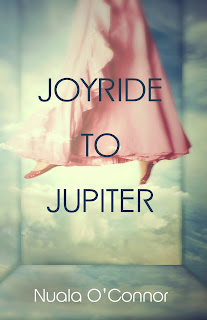 |
| Click on cover to buy. |
Joyride
to Jupiter blog tour
I’ve
just finished my Joyride to Jupiter
and, by Jove, I’m chuffed to bits that Nuala O’Connor, the author of this
deeply moving and provocative collection of short stories is here to answer
some of my questions. Welcome, Nuala.
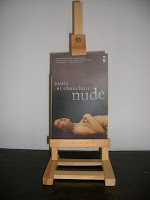 |
| Click on covers for links to previous interviews. |
Your short story collections are
something of masterclasses
of the form.
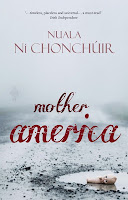

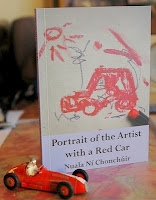

And I know
you write novels and poetry too.
I wonder if you think the form a challenge
still, and what keeps you coming back to short stories, given that novels are
often regarded as more lucrative and poetry more respected?
Short fiction is a deeply challenging
form; I fear stories and love them. I’m afraid because when I finish one, I
find it hard to believe I’ll ever write another one. I wasn’t always like that
– things spilled out of me. But my head has shifted into the long mode of the
novel and that’s a building and rebuilding process that takes years. Whereas
the story is a faster, freer construction, and it has teetering legs. I wish
story writing was easier, less fraught. Conversely that wobbly tension and
intensity is also what I like about them – there’s an element of puzzle solving
and the scale feels minute but important. I adore the detail of short fiction,
the balancing of motifs and characters and events. Stories are so stunning when
done well – people like Alison MacLeod and Flannery O’Connor amaze me with
their exquisite stories. I long to be that
good so I keep trying.
You
recently wrote a piece for the Irish Times, saying:
“When
I write about subjects that are close to me, such as pregnancy loss and
secondary infertility, I don’t aim to write to expunge myself of grief, but to
work out what happened and why, to get a clear view of a chain of events, and
to see how my characters are able to deal with their troubles on an emotional
level. To see how they survive.”
I
was reading Louise Glϋck’s “Telescope” around
the same time, that is a sort of demonstration of the curiosity you describe, I
think, but a more obvious analysis.
“There is a moment when you move your eye
away...”
The chain is there: the reader is watching the poet watching
themselves, yet the reader can only watch.
“…then you’re in the world again, at
night on a cold hill, taking the telescope apart.”
Glϋck’s observation is clinical – contrasting with the
humanity it reveals – whereas your prose makes the reader less a voyeur and
more a participant in the humanity of your subjects, so that when your stories’
people are behaving in ways that are deeply complexly troubling, such as Mr
Halpin in the title piece, we aren’t on a cold hill observing the writer’s
experiment, we are immersed, uncomfortably close yet able to understand in a
way that perhaps we might never be if we were only shown.
It’s
more than “How can I tell what I think till I see what I say?” (E. M. Forster,
Aspects of the Novel), isn’t it? But is it as simple as showing people who
fuck, shit and fart? What do you think you do with the short story that makes
the reader a participant rather than watcher?
I try to be my characters, to see the world as they see it even if, like Mr
Halpin, that’s in a skewed, unsavoury way. So I might not agree with, or
approve of, things my characters believe or get up to, but I want to write
about people who are not paragons. None of us are, we all have weirdo
tendencies and those are the things that are interesting for an author to
explore. Every character, no matter how horrid (think Humbert in Lolita) has to have a saving grace or
two.
It’s funny when other people start to
comment about how unlikable certain characters of mine are – I often don’t see
it like that. You grow fond of all kinds of nasties when you invent them. Also,
I sometimes wonder if people have incredibly sheltered lives, or maybe they
just don’t read widely, or if that limited reaction is a form of
holier-than-thou-ness. It may be an Irish thing, we have a faux openness that
conceals all kinds of murkiness that we like to pretend doesn’t exist.
In
your book’s epigraph, you quote from Ovid’s Ars
Amatoria, a work in which Ovid uses a form of poetry reserved for elegy to
write a textbook on love; Joyride to Jupiter evokes the happy excitement of
young and godly love yet the stories offer far more mature and nuanced
variations of love:
“But she looks happily bewildered,
because I know what to do to make her feel good and she responds as she always
did, with grunts of pleasure and fierce kisses.
Afterwards we eat. This
has been our ritual for fifty years.” – Joyride to Jupiter, p6
“My parents’ marriage didn’t age
well, there was a certain disgust for each other in all interactions towards
the end.” – Consolata, p17
“I open my arms and the Yellow
descends, poised as a hawk.” – Yellow, p27
“Jesus Christ, no wonder she had to
resort to vials and petri dishes and the syringed swimmers of a stranger.” –
The Donor, p30
“I sit there and mull over how best
to get Lota to help Tito and his brother. Perhaps if I spoil her a little, I
will get my way; she responds well to devotion.” – The Boy from Petrópolis, p41
“I snorted at the idea of anyone
having an affair with my tub-tastic brother-in-law, but Beatrice had turned
forty shades of puce.” – Napoli Abú, p49
“He gripped the steering wheel and
grunted, an attempt to quell the loss surging up through him.” – Tinnycross,
p61
“You saw his naked body and what
fifty-three years had made of it. And he saw you seeing him.” – Fish, p63
“Maria wondered about all the lives
that went on in the apartments in the quays and the house in Inchiore and Bluebell:
the sex, the sorrow, the shame that filled those rooms, under lights and in
darkness, seven days a week.” – Futuretense®, p65
“To my daily surprise the mirror
above the sink tells me that I am old.” – Squidinky, p82
“Malachy stopped and stared at his
nephew.” – Men of Destiny, p92
“I wish some fella would grab me
sometime, in front of him, and kiss the face off me. That’d shake him.” – Penny
and Leo and Married Bliss, p99
“Her hands come around your front and
she unbuttons the top of your uniform.” Room 313, p107
“Maybe she has imagined this person,
this stench-less demigod; her loneliness has conjured him out of the air.” Mayo
Oh Mayo, p115
“Give me sirens and buses and neon
any day. I’m high on the hog here, all right; Parnell behind me, the Spire
before me, and Daniel O’Connell himself down the other end, standing proud. –
Jesus of Dublin, p127
“She bobs down to tread water and
looks up at him. Over the sloshing of the river she can hear him grunt.” – Shut
Your Mouth, Hélène, p135
“I sit on the bed beside her and she
climbs into my lap and looks up into my face; she puts her hands in mine and
with them, I know, all of her faith.” – Girlgrief. P138
“I am thinner now, a shade of the
girl who tripped up and down Nun’s Island with a different man on her arm each
month.” – American Wake, p141
“We head south because there is a
place that Fergus thinks I will like. I am content to be a passenger, inert and
quiet; content to be led.” – Storks, p145
Ovid was known for irony, though
there’s a suggestion Ars Amatoria was
intended to change society for the good of women. “Storks”, the final story in
your collection, deals with exactly the sort of issues you’ve dealt with
personally, as referred to in the Irish Times piece mentioned earlier. I found
myself pulled into stark self-analysis as I read it, having miscarried a few
weeks ago. It could be bleak and grief-weighty, but instead it lifts off into
hopeful optimism. Talk a little about your intentions and hopes for the
collection.
I’m sorry to hear you lost your pregnancy,
Rae, it’s a difficult thing to go through.
This collection is several years
work, maybe seven. I was writing novels during that period, not concentrating
on stories at all, many of them were commissions that I had to complete from snippets.
But there are patterns and obsessions that run through the book: fertility
issues and pregnancy loss, ageing, infidelity, the sea (I live in a landlocked
county), the Virgin Mary (I thought I was over her but, no). So although these
stories are collected, they belong to a time period and my passions and
interests over those years. They belong to each other and, yet, they are
discrete pieces. I hope that they feel a little cohesive as a read but also
that their individuality shines through too. It’d please me if readers were
discomfited but also that they might cry and laugh. My biggest hope is that readers
like the language because language is my god.
Amen to your use of language, Nuala. Thanks so much for coming to talk about Joyride to Jupiter - it's a stellar collection and I wish you the universe for success.
 |
| Click on author pic for link to blog. |
Nuala O’Connor AKA Nuala Ní Chonchúir was born in Dublin, she lives in East Galway. Her fifth short story collection Joyride to Jupiter was published by New Island in June 2017. Penguin USA, Penguin Canada and Sandstone (UK) published Nuala’s third novel, Miss Emily, about the poet Emily Dickinson and her Irish maid. Miss Emily was shortlisted for the Bord Gáis Energy Eason Book Club Novel of the Year 2015 and longlisted for the 2017 International DUBLIN Literary Award. Nuala’s fourth novel, Becoming Belle, will be published in 2018. www.nualaoconnor.com
Monday, September 30, 2013
Para pet

I’m delighted to have
Alison Lock over at the blog today to talk about her debut fiction collection,
Above the Parapet; “Short Stories that explore beyond the usual boundaries”.
Welcome, Alison! Now, just be careful, pet, as we climb into the harness - have you piloted a tandem paraglider before? No. Oh, right. Neither have I. Ne' mind, I'm sure we'll get the hang of it. Right, off we go!
I must start by quoting
some of the extraordinary blurb from your book:
“The world is on a cusp, hovering between the familiar and the
dystopian. With humour and compassion the characters are sucked into a
slipstream of ordinary events and unusual happenings. A woman hears her roses
crying as the ash begins to fall; a girl with hearing loss is more at home with
bugs, a man with good intent transmogrifies. There’s a secret inside a pony, an
occasional angel, a swarm of flying fish and then there is the dog. And all the
while, the natural world is taking an ominous turn.”
This description seems to
be suggesting your stories are “slipstream” fiction. But I found myself
thinking about genres and how I would describe your stories. There’s a mythic
quality to the subject matter. In “The Mission”, you give us a character called
Gabriel - and I won’t spoil the ending, but - considering the location, it was
difficult not to imagine this story as a kind of passion play. Indeed, there
are other stories in this collection that make the Bible seem like boring
realism, so much so that when asked what I was working on this week, I
inadvertently said “Above the Parable”. In other stories, there are floods and
all manner of natural disasters looming on the unnervingly close horizon, and “Inside
the Pony” has a young girl, named Evie, hiding a secret inside a My Little Pony
which made me think immediately of the Trojan horse, therefore, I wanted to ask
if you could tell me about the inspiration for this collection?
Firstly, Rachel, thanks for reading the
book and having me on your blog.
With regard to the inspiration for this
collection, it was not a process of thinking, 'I'll write stories about climate
change and relate them to events in the Bible.' I can see how you might think
that, and isn't it interesting that stories of impending natural disaster have
been written throughout time. In Greek
tales, volcanoes were passages opening to the underworld. In the Scandinavian
traditions, the sun, the moon and the stars take on mythic proportions, and the
wind is ascribed to sorcery. In fact, in many traditions, the otherwise natural
forces that create the world we live in are attributed to all manner of
mythical creatures and supernatural forces, and today, some of the occurrences
in these stories come close to the predictions of the climate change scientist.
Perhaps it is the stories and tales read to us in childhood and passed down
from generation to generation that never leave us. I can also see how the idea
of a passion play has occurred, now you mention it. I suppose having a couple
of angels inhabiting the village does set the scene rather.
Natural disaster in its many forms has
become a part of our lives even if we don't experience it first hand; it is
always on the horizon, visually, aurally, everyday, on the radio and TV;
neither can we escape all the scientific analysis and reports from journalists on
the scene. But I wanted to explore the everydayness of this impending feeling,
how people are affected and how they are not, their everyday relations in the
face of disaster, and not avoiding the darker, unpleasant side.
These stories exist entirely in the realm
of the imagination, my imagination, although their source at times has come
from actual events, such as flooding, rising sea levels, extra-ordinary heat. Placed
within a short story, they are balanced uneasily between a liminal world of
imagination, fable, history, and lived experience. It is the region behind the log
that floats down the river, the wake of a bird in the sky, the slipstream.
Speaking of natural disaster, this harness is a bit tight. Ooph, that's better. Ooh, mind your head on that bird!
Nah then, I briefly mentioned
location. Many of these Royston Vasey-esque stories are set in towns with plausible sounding Anglo-Saxon riddled
names that I felt certain could be in my native Yorkshire. For example,
Windblatter, I was so sure of its authenticity that I had to Google it, and found
this:
Folgende Eigenschaften hat Ayla als TERRIER und Tussi-Yorkie:
- sobald es regnet, kann sie Pipi in Rekordschnelle erledigen
(eigentlich hat sie gar kein Bock rauszugehen)
- wenn es nass ist / Schnee liegt, läuft sie am Rand auf den
Pflastersteinen, um gar keine nassen Pfoten zu bekommen
- sie erschreckt sich vor Wind
- sie bellt im Wind Blätter an :lol:
- sie erschreckt sich vor ihren eigenen Pupsen
- wenn Hunde von weiten kommen, tut sie einen auf Rottweiler und
bellt die Hunde an
For those of you who don’t read German, Google has kindly translated
it as:
Has the following properties as Ayla and chick TERRIER Yorkie:
- When it rains, they can do pee in record fast (actually she did not feel like going out)
- When it is wet / snow, it runs on the edge on the cobblestones to get no wet feet
- They frightened of wind
- She barks at leaves in the wind: lol:
- They are frightened of their own fart
- When dogs come from far, she's doing on a Rottweiler and barks at the dogs
Yorkshire Terrier! Tell me, Alison, would I be awarded a prize
rosette for budding Miss Marple at The Great Yorkshire Show? Tell me about the
importance of place in your fiction. Does where you live or grew up shape one’s
fiction, do you think?
Firstly,
the name of the island, Windblatter, is entirely made up – although it might
mean all manner of things in German (I had not considered this) – it just
seemed the right name for the place, an island that was constantly battered by
the wind – it's that simple. It's true that the Yorkshire Pennines are a
powerful backdrop to my life, but, I'm sorry to disappoint you, Miss Marple,
the story was not set there. In fact, if
anywhere, it was a Hebridean island that inspired the setting of this story,
and probably only then by a single garage that had been fixed to the rocky
shore by steel ropes. There had been a hurricane the previous winter with tides
so high that, in some cases, people were cut off from their loved ones, roofs lifted
from houses, caravans blown from one end of the island to the other.
Setting
is very important to me, and the natural world takes precedence in most of the
stories. Often, those in tune with the natural world fare better than those who
rail against it. In the last story Swarm, it is the girl who is able to speak
the language of the Wingfish who survives and I placed this story at the end of
the collection because I wanted it to end with a character who is lifted from
disaster because she is in tune with her surroundings.
I liked that one a lot! Smashing. Oh, Alison, I'm not sure we're meant to be this high. That bird whose slip stream we were following seems to have given us the slip and pulled us into a thermal, only I'm not wearing any thermals and it's a bit parky up here and I'm ever so nesh. Can you drop us down? Speaking of drop....
One of my favourite
stories in your collection was “Map Woman”. I loved the darkness, the ominous
weather – nature is really the main character in all these fictions – but I
especially liked that you don’t make excuses for your characters’ behaviours.
They engage in some grim acts at times, although I found myself laughing at the
end of “Map Woman”. This story actually reminded me of a film called
“Sightseers”. Yet, for all the humour noir and surreal events, there’s a very
real engagement with issues surrounding climate change.
What I thought
particularly interesting was how you managed to present these themes on a level
where they are relevant to ordinary people; you’ve come at this topic from a
very original angle. Large events feel intimate, especially in a story such as
“Ashes for Roses”, I think. I was so pleased to read a story about “a brother
and sister living at their parents’ home well into their sixties”. You evoke
wonderfully a sense of village life, and community, and also people who are
often ignored in fiction. Could you tell me how you came to write about Leah
and Henry?
I'm very glad you find the humour in my
stories. I am aware that the elements of dark comedy can easily go unnoticed or
be read in a serious way often because of their dead-pan delivery.
With Leah and Henry in Ashes for Roses, I
wanted characters whose relationship is life-long. They could easily have been
a husband and wife but I really wanted characters who went back to childhood with
all the irritations and petty competitions that build up and often continue
throughout adult life. I wanted to see how those characteristics would play out
when placed in a potentially devastating scenario. I suppose it is to do with
the things that we cling on to, things that might not mean much in terms of the
material, but the things that are important in making us who we are.
Yes, I suppose that's true. And what I am now is clung to you in this tandem harness! Let's hope this scenario isn't life-long. Can you take us down, please? Any longer up here and I'll be wanting wings. Ah, land ahoy. Mind that pylon......we'll be grand, so long as you don't land us in Darfield; we'd be like Plague Victims Catapulted over Walls into Besieged City!
Finally, there are twenty
stories in your collection, all packed with keen
observations. You are also a poet and I find I am drawn to the fiction of
poets, possibly because of the beautiful prose they employ.
“As a result of winning the Indigo Dreams Poetry Collection
Competition in 2010, Alison Lock’s first collection of poetry ‘A Slither of
Air’ was published.”
Do you find your poetry background helps
you write fiction, or are the two genres in separate brain departments? How do
you know the difference between a poem idea and a story idea?
I
recently talked about the process of writing poetry and short stories in a post
on Carys Bray's blog and particularly about the source; when an idea becomes a
poem or a story or a piece of prose. I love poetry for its ability to express
ideas using words as shapes, well, that's how I see it.
In
short stories I like the subtle use of words, the light touch, the description
that is also an emotion, the small things that describe the whole far better
than a panoramic shower of words. I remember learning about the technique of
synecdoche on my MA course and just loving it. It was such a revelation and it
opened up so many possibilities. I
suppose all writers have their favourite ways or techniques and these are
useful but I don't believe that techniques+idea=a good story, there has to be
that impulse to explore, create and learn about characters in their settings
and the ability to take the reader with you. I hope my stories do this, because
I just love what I do.
Are you going already? You shuftied off that harness pretty swiftly. Alreight. Thanks so much for talking to me, Alison. Thank you for landing us safely, albeit on top of a very precarious stone. Above the Parapet can be bought direct from Indigo Dreams, and here for Kindle.

“Alison lives in Holmfirth, Yorkshire. Many of her poems and short
stories have been published in anthologies, magazines and even a mobile phone
app. She has an MA in Literature Studies and Creative Writing from York St John
University and was the first Poet-in-Residence at Holmfirth Arts Festival.”
Other nice things folk
have said about Alison’s work:
“Alison's stories linger long after you've finished reading them.
Soulful, unsettling and beautifully written.” - Rachel Connor
“As you begin savouring each tale, you don't want it to end. The
worlds that she deftly conjures feel possible, yet otherworldly; the characters
are complex and remain with the reader long after the stories end.” - Suzanne
Gannon
“Ethereal, oppressive, playful, savage, chilling and haunting -
Alison Lock's short stories are an unsettling journey into the unknown. Each
weaves a magical and mesmerizing spell, each keeps the reader tense and unsure
in a world that seems to shimmer between reality and ominous fantasy - some
teasing and whimsical with a gleeful, misanthropic Roald Dahl humour, others
more sinister and threatening. This 20-strong collection certainly impresses
but it's a far from easy read, and not just because of the undercurrents of
darkness. The tales - although lyrical and beguiling - often seem more like
poetry than prose, challenging readers to bring their own interpretations and
meanings to the sparse, cryptic storytelling.” – Iain Pattison. Amazon reviews.
Subscribe to:
Posts (Atom)