Showing posts with label New Island. Show all posts

Tuesday, June 27, 2017

By jove


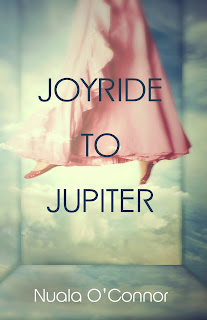
http://newisland.ie/product/joyride-jupiter/
Click on cover to buy.


Joyride to Jupiter blog tour
 
I’ve just finished my Joyride to Jupiter and, by Jove, I’m chuffed to bits that Nuala O’Connor, the author of this deeply moving and provocative collection of short stories is here to answer some of my questions. Welcome, Nuala. 


http://snowlikethought.blogspot.co.nz/2009/08/nude-not-naked-tour_31.html
Click on covers for links to previous interviews.


Your short story collections are 
something of masterclasses 
of the form.
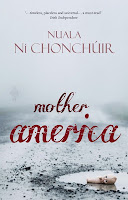
http://snowlikethought.blogspot.co.nz/2012/07/mother-land.html
  http://snowlikethought.blogspot.co.nz/2015/09/as-kings-or-serfs.html
http://snowlikethought.blogspot.co.nz/2009/12/christmas-eves-special.html
http://snowlikethought.blogspot.co.nz/2011/11/nuala-risen.html


And I know you write novels and poetry too. 

I wonder if you think the form a challenge still, and what keeps you coming back to short stories, given that novels are often regarded as more lucrative and poetry more respected?


Short fiction is a deeply challenging form; I fear stories and love them. I’m afraid because when I finish one, I find it hard to believe I’ll ever write another one. I wasn’t always like that – things spilled out of me. But my head has shifted into the long mode of the novel and that’s a building and rebuilding process that takes years. Whereas the story is a faster, freer construction, and it has teetering legs. I wish story writing was easier, less fraught. Conversely that wobbly tension and intensity is also what I like about them – there’s an element of puzzle solving and the scale feels minute but important. I adore the detail of short fiction, the balancing of motifs and characters and events. Stories are so stunning when done well – people like Alison MacLeod and Flannery O’Connor amaze me with their exquisite stories. I long to be that good so I keep trying.


You recently wrote a piece for the Irish Times, saying:

“When I write about subjects that are close to me, such as pregnancy loss and secondary infertility, I don’t aim to write to expunge myself of grief, but to work out what happened and why, to get a clear view of a chain of events, and to see how my characters are able to deal with their troubles on an emotional level. To see how they survive.”

I was reading Louise GlÏ‹ck’s “Telescope” around the same time, that is a sort of demonstration of the curiosity you describe, I think, but a more obvious analysis. 

“There is a moment when you move your eye away...” 

The chain is there: the reader is watching the poet watching themselves, yet the reader can only watch. 

“…then you’re in the world again, at night on a cold hill, taking the telescope apart.” 

GlÏ‹ck’s observation is clinical – contrasting with the humanity it reveals – whereas your prose makes the reader less a voyeur and more a participant in the humanity of your subjects, so that when your stories’ people are behaving in ways that are deeply complexly troubling, such as Mr Halpin in the title piece, we aren’t on a cold hill observing the writer’s experiment, we are immersed, uncomfortably close yet able to understand in a way that perhaps we might never be if we were only shown. 

It’s more than “How can I tell what I think till I see what I say?” (E. M. Forster, Aspects of the Novel), isn’t it? But is it as simple as showing people who fuck, shit and fart? What do you think you do with the short story that makes the reader a participant rather than watcher?

I try to be my characters, to see the world as they see it even if, like Mr Halpin, that’s in a skewed, unsavoury way. So I might not agree with, or approve of, things my characters believe or get up to, but I want to write about people who are not paragons. None of us are, we all have weirdo tendencies and those are the things that are interesting for an author to explore. Every character, no matter how horrid (think Humbert in Lolita) has to have a saving grace or two.

It’s funny when other people start to comment about how unlikable certain characters of mine are – I often don’t see it like that. You grow fond of all kinds of nasties when you invent them. Also, I sometimes wonder if people have incredibly sheltered lives, or maybe they just don’t read widely, or if that limited reaction is a form of holier-than-thou-ness. It may be an Irish thing, we have a faux openness that conceals all kinds of murkiness that we like to pretend doesn’t exist.


In your book’s epigraph, you quote from Ovid’s Ars Amatoria, a work in which Ovid uses a form of poetry reserved for elegy to write a textbook on love; Joyride to Jupiter evokes the happy excitement of young and godly love yet the stories offer far more mature and nuanced variations of love:

“But she looks happily bewildered, because I know what to do to make her feel good and she responds as she always did, with grunts of pleasure and fierce kisses.
Afterwards we eat. This has been our ritual for fifty years.” – Joyride to Jupiter, p6

“My parents’ marriage didn’t age well, there was a certain disgust for each other in all interactions towards the end.” – Consolata, p17

“I open my arms and the Yellow descends, poised as a hawk.” – Yellow, p27

“Jesus Christ, no wonder she had to resort to vials and petri dishes and the syringed swimmers of a stranger.” – The Donor, p30

“I sit there and mull over how best to get Lota to help Tito and his brother. Perhaps if I spoil her a little, I will get my way; she responds well to devotion.” – The Boy from Petrópolis, p41

“I snorted at the idea of anyone having an affair with my tub-tastic brother-in-law, but Beatrice had turned forty shades of puce.” – Napoli Abú, p49

“He gripped the steering wheel and grunted, an attempt to quell the loss surging up through him.” – Tinnycross, p61

“You saw his naked body and what fifty-three years had made of it. And he saw you seeing him.” – Fish, p63

“Maria wondered about all the lives that went on in the apartments in the quays and the house in Inchiore and Bluebell: the sex, the sorrow, the shame that filled those rooms, under lights and in darkness, seven days a week.” – Futuretense®, p65

“To my daily surprise the mirror above the sink tells me that I am old.” – Squidinky, p82

“Malachy stopped and stared at his nephew.” – Men of Destiny, p92

“I wish some fella would grab me sometime, in front of him, and kiss the face off me. That’d shake him.” – Penny and Leo and Married Bliss, p99

“Her hands come around your front and she unbuttons the top of your uniform.” Room 313, p107

“Maybe she has imagined this person, this stench-less demigod; her loneliness has conjured him out of the air.” Mayo Oh Mayo, p115

“Give me sirens and buses and neon any day. I’m high on the hog here, all right; Parnell behind me, the Spire before me, and Daniel O’Connell himself down the other end, standing proud. – Jesus of Dublin, p127

“She bobs down to tread water and looks up at him. Over the sloshing of the river she can hear him grunt.” – Shut Your Mouth, Hélène, p135

“I sit on the bed beside her and she climbs into my lap and looks up into my face; she puts her hands in mine and with them, I know, all of her faith.” – Girlgrief. P138

“I am thinner now, a shade of the girl who tripped up and down Nun’s Island with a different man on her arm each month.” – American Wake, p141

“We head south because there is a place that Fergus thinks I will like. I am content to be a passenger, inert and quiet; content to be led.” – Storks, p145

Ovid was known for irony, though there’s a suggestion Ars Amatoria was intended to change society for the good of women. “Storks”, the final story in your collection, deals with exactly the sort of issues you’ve dealt with personally, as referred to in the Irish Times piece mentioned earlier. I found myself pulled into stark self-analysis as I read it, having miscarried a few weeks ago. It could be bleak and grief-weighty, but instead it lifts off into hopeful optimism. Talk a little about your intentions and hopes for the collection.

I’m sorry to hear you lost your pregnancy, Rae, it’s a difficult thing to go through.

This collection is several years work, maybe seven. I was writing novels during that period, not concentrating on stories at all, many of them were commissions that I had to complete from snippets. But there are patterns and obsessions that run through the book: fertility issues and pregnancy loss, ageing, infidelity, the sea (I live in a landlocked county), the Virgin Mary (I thought I was over her but, no). So although these stories are collected, they belong to a time period and my passions and interests over those years. They belong to each other and, yet, they are discrete pieces. I hope that they feel a little cohesive as a read but also that their individuality shines through too. It’d please me if readers were discomfited but also that they might cry and laugh. My biggest hope is that readers like the language because language is my god.


Amen to your use of language, Nuala. Thanks so much for coming to talk about Joyride to Jupiter - it's a stellar collection and I wish you the universe for success.


  http://womenrulewriter.blogspot.co.nz/
Click on author pic for link to blog.

Nuala O’Connor AKA Nuala Ní Chonchúir was born in Dublin, she lives in East Galway. Her fifth short story collection Joyride to Jupiter was published by New Island in June 2017. Penguin USA, Penguin Canada and Sandstone (UK) published Nuala’s third novel, Miss Emily, about the poet Emily Dickinson and her Irish maid. Miss Emily was shortlisted for the Bord Gáis Energy Eason Book Club Novel of the Year 2015 and longlisted for the 2017 International DUBLIN Literary Award. Nuala’s fourth novel, Becoming Belle, will be published in 2018. www.nualaoconnor.com

Sunday, July 8, 2012

A mother land


Welcome back to Snow Like Thought, Nuala. I’ve built a Nuala annex on the book case that doubles as a bunk where you’re welcome to pog any time you like; it’s always lovely to have you.

‘Pog’  - what a great word! I’m wondering now if you imported it to New Zealand, or if you found it there? Thanks for hosting me today, Rachel.

I want to begin this interview with a general observation about interviews. There’s a tendency with writers to often quote another (more famous) writer as a means of borrowing authority for the substance of their answers in interviews. For example, Lloyd Jones said, when asked about narrative[1], ‘I like Samuel Beckett’s quote when asked about James Joyce’s work. “He (Joyce) isn’t writing about something. He’s writing something,” Beckett explained, which gets to the heart of what I’m trying to say here.’ Which gets to the stone of the peach; I must mind my tongue! So, I thought I would use your answers to questions in other interviews as the basis for my own questions.

In the Connacht Tribune you said you had your “Best Holiday” in “New York. I felt right at home. I just loved everything about it: the seediness, the culture, the people, the physicality of it.” I wondered if you could talk a little about your experiences in New York and whether they fed into any of the stories in your fourth short story collection Mother America? 

New York is definitely an influence on this book. I always longed to go there but only managed my first trip five years ago. I’ve been back a few times since – I got married there in 2010. Like every place I go, I am on high alert in NY: notebook and camera at the ready as I walk the streets or visit museums. NY is so vast and varied there is always something wonderful to see.

I got the inspiration for the story ‘Triangle Boy’ from my cousin-through-marriage Cathleen, who lives in NY. She told me about the Triangle factory fire in 1911. The story ‘My Name is William Clongallen’ concerns a Brooklyn man of Irish origin. Brooklyn is different to Manhattan and I love its villagey feel, so that turns up. The story ‘Letters’ was partially inspired by the non-fiction of Maeve Brennan, an Irish writer who made her home in NY and wrote for The New Yorker. So, through reading and by being there, I absorb things that I later use. Much like everywhere I go.

Do you think writing fiction set in a specific place is a form of synaesthesia?

For me it is. I get transported to a place when I write or read about it. When I read Janet Frame, I am in New Zealand. When I read Chekhov, I am in Russia. I don’t need to have set foot in either of their home-places to feel it, smell it etc. I hope that I can recreate that at times in my fiction, that people feel they are in rural Limerick, say, when they read the Irish-set part of ‘My Name is William Clongallen’; or that Paris is alive to them when they read ‘Poisson d’Avril’ or ‘Spelunker’. Reading should be a sensory experience.

Many of the stories in Mother America are about exile, of people leaving Ireland to go to America, stories of mothers, and of sons, but I was thinking about the title and it reminded me of Edna O’Brien’s Memoir Mother Ireland, and I thought about one of your stories in your last short fiction collection, Nude, ‘Madonna Irlanda’. You gave an interview about Nude to The Short Review. “Once I cottoned on to the motif of the nude in some of the stories I was writing, there were stories that had to be ditched because they didn't fit with the title theme.” In Authortrek you talked about “inspirations” over “influences”, mentioning Edna O’Brien  You also mentioned you worked on The Juno Charm and Nude simultaneously but as a reader I find Mother America a stronger companion to the Juno Charm than Nude, even wondering if you had plans for a Mother Ireland collection. 

I read Mother Ireland (ages ago) and found some of it quite fanciful about Ireland. Edna O’Brien has lived most of her life in London, so she has that emigrant thing of knowing an Ireland that no longer exists, except in her memories. If I did write a Mother Ireland it would be very different to hers but, similar also – I went to convent schools, I had a country upbringing (despite being from Dublin), and, like her, I was a sensitive child. But my life is too pedestrian for memoir, so I won’t be going there. Maybe the next fifty years will prove very exciting and I’ll change my mind!

Mother Ireland begins with O’ Brien leaving Ireland but there are writers such as Frank McCourt whose parents had migrated to America but returned to “Mother Ireland” – for better or worse – and your stories span the periods their fictions detail and some similar terrain. The stories in Mother America in particular struck me as asserting themselves in the Irish canon, compared to Nude which had a distinctly international feel I thought. How do you think your fiction fits into the literary tradition in Ireland? How important is a national perspective for a writer? Can you imagine, for example, ever being simply an international writer or would you want to be known as such, without your Irish heritage being a factor? I suppose what I’m really asking is, do you think your fiction demonstrates a migration of the imagination so that, in essence, you are always leaving Ireland, are always a migrant, and if so, how do you think this affects your writing?

I guess, like my contemporaries, I am more global in outlook, less insular. My generation saw huge changes in Ireland: the legalisation of contraception, the collapse of Catholicism, the feminist movement. All of which please me – I would not have found it easy to be born in the 1940s or 50s in Ireland. Life would have been too restrictive for me. So my fiction is postmodern and feminist in outlook, but also Irish.

When you are Irish, your bones are steeped in your nationality – it dictates language and attitude – so it’s inevitable for me, as a writer, to identify with my Irishness. But I also look to Europe, America and the world for freshness, for difference.

There is a particular brand of rural Irish fiction that appeals to me more as I grow older; I used to be annoyed by it as it didn’t represent my life. I also love contemporary work that deals with Ireland’s new issues: immigration, divorce, drugs, loss of religion etc. There is more than one Ireland.

I don’t think I am ‘always leaving Ireland’ in my work, but I like to write about those who leave and return, to see what that throws up for them. There is a lot of sentimentality about Ireland and it’s better to clear that away and look at the country and its people, warts and all, I feel.

Lloyd Jones has said it is “the immigrant’s task to make themselves new.” I think this also applies to fiction writers. In Mother America you manage to re-remember an Ireland of the past and at the same time you have positioned yourself at the helm of a very inspirational creative development in contemporary Irish fiction. I think the only way I can describe it is when I think about the first telecommunications cables being laid from Ireland to Newfoundland – which gave rise for speedy two way communication – and you’ve done the present equivalent with Mother America. In your interview with Prairie Schooner you talked a little about how inspirational you find American fiction, I’m sure the same sentiment will come back across the Atlantic about Mother America.


Thanks, Rachel. I hope so. I find the Americans to be superlative short story writers: Anthony Doerr, Ron Rash, Caitlin Horrocks, Flannery O’Connor, Wells Tower, Manuel Munoz. All brilliant and inspirational.

What is next for you, Nuala and where can we buy Mother America?

I have a novel completed, set in Dublin and the Scottish Highlands, for which I am seeking a good agent. And I’m writing more stories and starting out trepidatiously on another novel. So, busy busy.

You can buy Mother America from The Book Depository with free delivery, worldwide.

Thanks for having me by, Rachel. On Monday 16th July my virtual tour takes me to writer Declan Burke’s blog in Dublin. I hope some of your readers will join me there.

Thanks so much for stopping by, Nuala. Very best of luck with your agent search and finishing your latest novel, and for your Frank O’Connor International Prize for Short Stories listing - congratulations!


BIO
Nuala Ní Chonchúir is a short story writer, novelist and poet, born in Dublin in 1970 and living in Galway. Her fourth short story collection Mother Americawas published this month by New Island. Nuala’s story ‘Peach’, in the Winter 2011 issue of Prairie Schooner, won the Jane Geske Award and was nominated for a Pushcart Prize. www.nualanichonchuir.com
--
http://www.facebook.com/MotherAmerica
www.nualanichonchuir.com
http://womenrulewriter.blogspot.com/

[1] Finlay MacDonald, Words Chosen Carefully; New Zealand Writers in Discussion, 2010. P 18